
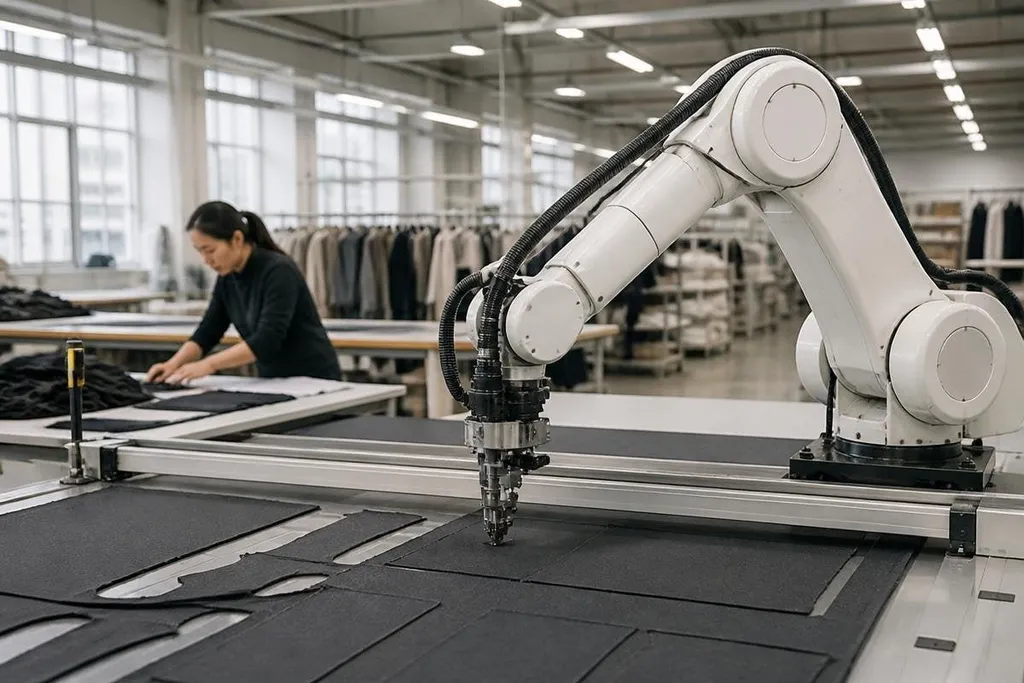
A fashion robot can cut fabric, move garments, inspect seams, or sort returned clothing. The business opportunity depends on the task: repeated motions with fixed inputs suit robots, while soft fabric and changing designs still demand human control.
For a clothing company, the useful question is not whether to buy a robot. It is which part of the work costs time, causes errors, or limits output.
- Cutting robots can turn digital patterns into repeatable fabric cuts.
- Vision systems can check seams, labels, and surface defects.
- Mobile robots can move rolls, bins, and finished garments between work areas.
Cutting and fabric handling
Fabric cutting is a clear place to start because the input can come from a digital pattern. A cutting system can follow the same file across many pieces, then send those pieces to sewing or assembly.
That creates more than a machine sale. Companies can earn money from pattern software, installation, blade service, operator training, and updates when a factory changes its materials. A supplier that understands fabric types can also help set cutting speed, pressure, and stacking rules for each job.
Handling remains harder. Cloth bends, folds, stretches, and sticks to other layers. A gripper that works on a box may fail on a thin sleeve. This gives room to sell custom end effectors, camera systems, and software that checks whether a piece has been picked correctly.
Sewing and assembly
Sewing has a larger technical barrier because the robot must control fabric while a needle moves through it. The material can shift during a stitch, and the right motion changes with thickness, shape, and seam design.
That limit creates several business paths. A company could sell machines for one narrow operation, such as pocket placement or seam joining, rather than promise a robot that makes a whole shirt. It could also sell a work cell where a person loads fabric and the robot handles a repeatable part of the job.
This model may fit smaller factories better than a fully automated line. The buyer gets help with a difficult task while keeping people close to design changes, unusual orders, and fabric that behaves badly.
Inspection, sorting, and returns
Cameras can check garments as they move past a fixed inspection point. Software can look for missing labels, open seams, stains, or size marks, then send a result to a worker for review.
The value comes from catching a problem before the garment reaches packing or a customer. A supplier can charge for the camera hardware, inspection software, setup, and ongoing changes as products and defect rules change.
Sorting offers another path. A robot can read a barcode, identify a product category, and move an item to a bin. In returns processing, that can help separate resale stock from items that need repair or recycling. The difficult part is rarely the first movement; it is handling garments that arrive folded, damaged, damp, or missing labels.
Garments with missing labels can turn a resale decision into a manual inspection job. Reporting from Robot 24 can show how a robot handles grading, repair queues, and small orders, where one damaged sleeve may need a different path from the rest of the batch.
Repair, resale, and small orders
Fashion robots may also support work after the first sale. A system could sort returned items, inspect wear, or guide a worker through a repair. Another machine could help prepare products for resale by checking tags, measurements, and visible damage.
Small-batch production gives suppliers a different opening. A brand that changes designs often may need software that sends new patterns to cutting equipment without rebuilding the whole line. The buyer may care more about setup time and changeover work than about maximum robot speed.
The limits still matter. Fabric handling, safety checks, worker training, floor space, and service support can cost as much as the robot.
There is also an open question about payback when orders change every week. I'd start with one repeatable task and measure the result for a full production cycle before buying a larger system.
A buying checklist for fashion robotics
Use these checks before turning a pilot into a purchase:
- Name the task: record the exact motion, material, and handoff a robot must handle.
- Measure the baseline: note worker time, rework, defects, changeovers, and stoppages.
- Test real material: include thin fabric, stretch fabric, layered cloth, labels, and damaged returns.
- Price the full setup: include grippers, cameras, software, training, service, safety equipment, and floor changes.
- Set a pass mark: agree on output, defect rate, uptime, and operator time before the trial starts.
The strongest opening is usually a narrow one: cut the same pieces, inspect the same seam, or sort the same return type. If that task pays for itself with real orders, the next business may be the service around the robot, not the robot alone.